2026 Aluminum Specialty Conference
DoubleTree by Hilton Hotel Columbus- DublinSeptember 22 – 24, 2026
Overview
Join industry professionals at the 2026 AFS Aluminum Casting Conference to explore the latest developments in molding, melt preparation, casting process control, and post-casting operations. The program features a “Back to Basics” session track that will focus on core principles and proven practices in aluminum casting — making it an ideal track for early-career professionals and a valuable refresher for seasoned attendees. With technical content relevant to sand casting, permanent mold, investment, lost foam, and die casting processes, this conference delivers practical knowledge and industry insight for engineers, operators, and plant managers across the aluminum casting sector.
For information about sponsorship opportunities at the event, please contact Kim Farrugia at kfarrugia@afsinc.org or click here.
Location
- DoubleTree by Hilton Hotel Columbus- Dublin
- Dublin, OH
- September 22 – 24, 2026
Hotel Information
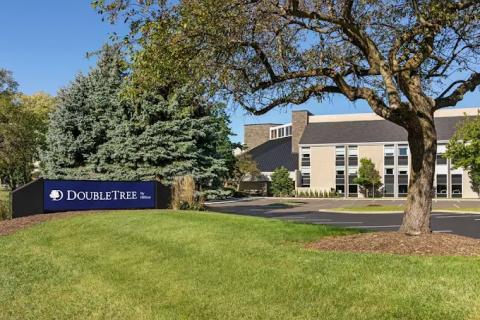
600 Metro Place
North Dublin, OH 43017
Standard room rate of $119/Night + Fees. To make a reservation, click the link provided. The hotel’s check-in time is 4 p.m. Check-in prior to the hotel’s published check-in times are subject to availability. Check-out time is 11 a.m. Room block closes 8/24/2026.
Conference Agenda

Anthony Lindert
Aluminum Division Chair
Oshkosh Corporation
Anthony Lindert
Aluminum Division Chair
Oshkosh Corporation

David Weiss
Vision Materials
Our industry is based on a combination of tradition, innovation and collaboration and is arguably one of the most important industries on the planet. As competitive and complementary technologies continue to advance, we need to gear up to meet the challenges and opportunities, while at the same time staying profitable and improving sustainability. This presentation will explore the arc of progress, from the earliest production castings made from aluminum to today’s current trends and research. As we move beyond “sand and hope”, using the tools of advanced materials science, digital transformation and exploding paradigms can accelerate our progress.

Jim Onders
Ohio Aluminum Industries Inc.
Frank Peters
Iowa State University
There are many challenges for a foundry when trying to optimize the surface finish of a casting, especially those made utilizing 3D printed cores. In 3DPS, orientation of the core in the print box is the 1st step in trying to minimize the layer steps in the final product before even starting the print job. Other factors that are important in the printing process include media type and size, layer thickness, grey scale printing, etc. Different methods of applying paint/talc to either blown or the printed cores has shown promise in improving the surface finish but does add another layer of variability to the casting process. Consistent measurement of the surface finish is also a challenge when trying to develop the best process and gain acceptance from end customer.
Inspection of casting surfaces has many sources of measurement error that limits is effectiveness. Current research is developing a digital standard to assess the casting surface. The method requires a 3D scan of the surface, but is agnostic to the type of scanner. This work is leading to a low cost scanner, integration into existing scanning systems used for dimensional inspections, and a new ASTM standard.

Brian Began
American Foundry Society, Inc.
A significant hurdle in solving casting defects is diagnosing them correctly. Too often, foundries implement ineffective solutions to resolve defects because of an incorrect defect diagnosis. For example, micro-shrinkage defects are often misdiagnosed as hydrogen porosity, so a foundry may misguidedly focus on degassing to solve the issue instead of optimizing grain refinement. which is far more likely to resolve the issue. Many production hours can be wasted working on the incorrect solution and the problem is only expected to exacerbate as those experienced foundry personnel and industrial subject matter experts (SME) who typically resolve these issues retire from the industry. Accordingly, a project was undertaken in hopes of creating a “ defect app” to harness the capabilities of Machine Learning (ML) and Artificial Intelligence (AI) to automate the diagnosis of defects using camera images and optical micrographs commonly available to foundries. The project plan, scope, timeline, specifics, and status update will be presented and demonstrated. This Research is funded through the American Foundry Society, as part of the Aluminum Casting Performance Initiative, Emergent Metal Casting Solutions (EMCS) program, sponsored by the Defense Logistics Agency Information Operations, J68, Research & Development, Ft. Belvoir, VA and the DLA Troop Support, Philadelphia, PA.

Nicholas E. Nanninga
Secat, Inc.
The integrity of structural aluminum castings is highly dependent on the quality of the molten metal prior to casting. Two key features critical to producing high quality castings are low distributions of inclusions and the management of hydrogen concentrations. It has been noted that some of the tools and testing methods used to characterize these parameters in the wrought aluminum casting industry are far less commonly used by shape casting foundries. This presentation will discuss the equipment options, metal assessments options and services available to foundries for measuring hydrogen and inclusions, both at aluminum molten metal stage and in the examination solid castings.
This panel will feature all of the conference speakers from the day so the audience can ask questions that may have been missed during the individual presentations or ask speakers to answer questions considering content covered in other presentations. This panel will also allow questions to subject matter experts that are not directly on a particular presentation topic.
(Drinks & Appetizers)

Qigui Wang
General Motors
Aluminum shape castings have been increasingly used in critical structures that require more reliable and quantifiable performance. Mechanical properties of aluminum castings strongly depend upon multiscale microstructure and casting defects that are determined by alloy and particularly complex casting process. To produce high integrity aluminum castings, comprehensive through-process modeling is vital for process optimization and casting quality assurance as computer simulations enable a better understanding of the physical phenomena involved during mold filling and solidification. Process modelling also offers opportunities to uncover some quality issues and quantities that are difficult or impossible to measure experimentally. This talk will review the latest development in aluminum casting process modeling and discuss requirements needed for more accurate prediction.
Session Chair:
Luke Schimmel
Fairbanks Morse Defense
Brian Began
American Foundry Society, Inc.
Casting alloys differ in their intrinsic requirements for melt treatment and measurement. Molten aluminum alloys are notorious for having hydrogen go into solution at typical holding temperatures that come out during solidification, potentially causing casting issues. Molten aluminum alloys are also notorious because oxygen more readily reacts with the surface of molten aluminum to form deleterious oxides, relative to most other casting alloys. This interactive discussion will review disciplines for oxide control and management. Moreover, strategies will be discussed for controlling hydrogen gas while discussing the detriments and the benefits that hydrogen can yield. The presentation will also review recently published AFS Standards for improved aluminum melt treatment and include a discussion on common missteps and oft-missed details. Finally, related molten bath treatments such as alloying, eutectic modification, and grain refinement will also be reviewed for their place in proper melt treatment, while also reviewing new developments and techniques being adapted into the aluminum foundry.

Dave Palmer
Twin Disc Incorporated
Many small and mid-sized foundries consider an in-house metallurgical laboratory to be an expensive luxury that is out of reach. However, even modest laboratory capabilities can provide a tremendous amount of insight into casting issues. This talk will discuss simple lab techniques for evaluation of grain size, eutectic modification, and other metallurgical characteristics that can help your foundry troubleshoot defects, solve quality issues, and ultimately produce cost savings that will outweigh the cost of laboratory equipment. It will provide "hacks" to allow your foundry to gain valuable insight into metal quality at a reasonable cost.

Dan Hoefert
Eck Industries, Inc.
A broad-brush overview of gating fundamentals for gravity-pour systems. Presentation will answer the questions: How do you control filling velocities to avoid turbulence? How do you establish control solidification to avoid shrinkage porosity. And how do you design it all to be removable in the cleaning room.
David Weiss
Vision Materials
In-process weld rework of castings is often technically misunderstood by foundry customers and sometimes by the foundries themselves. Guidelines for welding castings of various alloys will be reviewed. To facilitate effective discussions about weld repair, it is beneficial to use a combination of internal and external data resources-many available in the AFS Library. These resources support conversations within the organization, at the foundry, and with the eventual customers of the castings. Grounding discussions in reliable data leads to improved casting outcomes and greater acceptance of the products as premium quality.
Session Chair:
Travis Bodick
Carley Foundry, Inc.
Kevin Morasch
Mercury Marine
Kevin Clark
Oshkosh
The preparation and coating of aluminum substrates are foundational to achieving long-term durability and corrosion resistance in demanding service environments. This panel will explore two complementary approaches to aluminum surface treatment: chemical pretreatment and anodizing. Kevin Clark will focus on cleaning, pretreating, and painting processes, emphasizing how these steps establish a robust coating system. Proper surface preparation enhances adhesion and corrosion protection, with standardized methods—such as those defined in MIL-SPECs—ensuring consistent quality across applications.
Kevin Morasch will delve into anodizing, an electrochemical process that transforms the aluminum surface into a hard, wear-resistant, and corrosion-protective layer. While the anodized coating is inherently porous, its performance is critically dependent on post-treatment sealing. Effective sealing prevents staining and degradation, ensuring the coating meets both functional and aesthetic goals. Together, these perspectives provide a comprehensive view of aluminum surface engineering, highlighting best practices and innovations that drive reliability and performance.
Dave Palmer
Twin Disc Incorporated
It has been known since at least the 1930s that small additions of Ti and B can reduce the grain size of aluminum castings. Today, grain refinement with Al-Ti-B master alloys is a common practice in aluminum foundries. Very roughly, it can be said that these master alloys contain microscopic particles of TiB2 and TiAl3, which act as "seeds" for new grains. However, the exact mechanisms by which TiB2 and TiAl3 refine the grain size of aluminum foundry alloys continue to be a topic of controversy, and many "unsolved mysteries" remain. This lack of fundamental understanding has slowed the pace of advancement in grain refinement practice. Density functional theory (DFT) is a quantum mechanical modeling method based on first principles that can be used to calculate the electronic structure of materials. From there, quantities such as surface energies, interfacial energies, strain energies, elastic modulii, etc. can be determined. This presentation will show how DFT simulations can shed light into the mechanism of grain refinement of aluminum casting alloys, and help answer the question: "What makes a good grain refiner?"
Jackson Piontek
American Foundry Society, Inc.
The Department of Defense had identified castings as a critical manufacturing need for national security purposes. This presentation discusses research currently being done to assist in two aspects of casting performance: casting design and investment shell cracking. On the casting design front, new alloy datasets, with a focus on C355-T6, are being created for addition into Metallic Materials Properties Development and Standardization (MMPDS) handbook. This will allow the military design community to utilize these alloys in military applications without requiring a mechanical properties knockdown factor, providing more opportunities for castings to be utilized in military designs. In the investment casting project, novel fiber optic strain sensors are being utilized to analyze and model shell strain and cracking during the dewaxing process. This project to aims to optimize shell design and dewaxing parameters to reduce shell cracking, which represents a large majority of investment casting defects.
Session Chair:

Hideki Gebken
Standard Manufacturers Services Limited
Jerrod Etienne
Bodycote
The negative impacts of porosity in aluminum castings is well understood. This presentation will explain how hot isostatic pressing or HIP eliminates porosity and the scenarios under which it should be considered as a regular step in the manufacturing process. Specific examples of HIP’s impact will be shared, and HIP’s pros and cons will be discussed. Listeners will learn how to decide if HIP is right for their specific applications.

Bob Braun
Wisconsin Aluminum Foundry Co.
The need for pressure tight aluminum castings continues to grow. Porosity in aluminum castings is the primary failure mode which results in castings not meeting this requirement. This presentation will explain how impregnation fills porosity voids and yields a pressure tight casting. Details on the Impregnation process will be shared along with discussing the pros and cons of this process. Specific applications will be shared including the reasons why impregnation should be considered as a regular step in the manufacturing process. Specific examples of impregnation’s impact will be presented. Attendees will be given the tools to decide how impregnation may fit their application.
David Weiss
Vision Materials
Brian Began
American Foundry Society, Inc.
The nearly abandoned ASTM B26, B108, B618 and B686 standards were recently revamped to be more applicable and useful to industry. In addition to updating a few specifics of the standards, additional tempers properties data for both designers and foundries were registered with both the Aluminum Association and ASTM as part of the update. In order to make the data more applicable, advanced Weibull statistics and changes in classifying the static properties of non-separately test cast bars were introduced and approved. This presentation will delve into the new statistics used, the new nomenclature for non-separately test cast bars, and the implication of the updates to both casting users and foundries.

Jason Oldenski
Harmony Castings
The 21st century foundry is rife with opportunity to evolve from the 20th century human-resource dependent, brute force process into a new, modern manufacturing facility that embraces the strengths of Industry 4.0. The journey from leveraging red-muscle tissue to gray matter can be daunting, exciting, frustrating and rewarding. This presentation examines an aluminum foundry's journey to evolve. It explores the real-life application of robotics, IOT, additive manufacturing, simulation and even Artificial Intelligence into a foundry environment. We examine the challenges, thought processes, and execution of projects with a focus on ROI.

Ted Schorn
Enkei America
This presentation will begin with a description of the aluminum foundry industry safety statistics and then describe Enkei America’s approach to safety and its program. This will highlight Enkei’s video-based training for visitors and contractors and “Stop 6” corporate safety initiative.
David Weiss
Vision Materials
This panel will feature all of the conference speakers from the day so the audience can ask questions that may have been missed during the individual presentations or ask speakers to answer questions considering content covered in other presentations. This panel will also allow questions to subject matter experts that are not directly on a particular presentation topic.
Attendance is limited.
Morris Bean & Company
777 E. Hyde Road
Yellow Springs, OH 45387
- Special PPE:
- Safety Glasses
- Hearing Protection
- Closed toe shoes
Registration
AFS Member:
$720.00 Early Registration (Ends 9/2/2026)
$900.00 Standard Registration
Non-AFS Member:
$1,125.00 Early Registration (Ends 9/2/2026)
$1,350.00 Standard Registration
AFS presents a variety of technical and management conferences (in both in-person and virtual formats). The refund policy for AFS conferences is as follows: 1) Substitutions are accepted at no charge at any time up until the start of the conference; 2) Full refunds are offered if AFS is notified in writing of cancellation at least 30 days in advance of the conference. No refunds or credits are available for less than 30 days written notice. Sponsorship not available for this event.
Sponsors
Gold