2026 Foundry Industry 4.0 Conference
DoubleTree by Hilton Hotel Bloomington - Minneapolis SouthJuly 28 – 29, 2026
Overview
Industry 4.0 is no longer just about the future. Smart, proactive manufacturers are using innovation and technology to improve productivity, profitability, and worker safety. Evaluating and implementing technology today is the key to remaining competitive and sustainable into your tomorrow. Discover how at this innovative conference focused on Industry 4.0 for metalcasters.
Exhibits - Sold Out
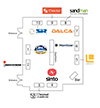
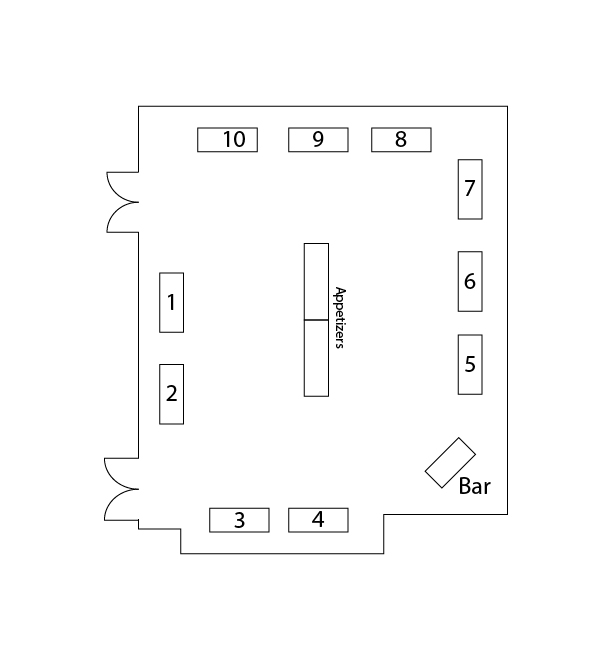
| AFS is looking for exhibitors and sponsors to show off their latest foundry industry 4.0 innovations, products, and services and to show support for AFS. Exhibitors will be given an eight foot black skirted table and two chairs. Wi-Fi is included and electricity will be made available, as needed. Ten exhibits are available and exhibits are on a first come, first served basis. Exhibits are located near the conference room in the same area where the lunch/breaks and evening reception will take place. Exhibits for AFS Corporate Members cost $1,725 ($2,050 for non-Members) and comes with one attendee registration with meals for the conference. The exhibits will be on Tuesday, July 28 and Wednesday July 29, 2026 with the exhibitor reception on the evening of July 28th. Click here to download the exhibits form. |
|
Sponsorships
Sponsor logos will be included in pre-event print and digital marketing materials, on the event webpage, in various communications, and onsite on posters and attendee guides. Sponsors will be formally recognized during the event and during presentations. Sponsorships are $950.
For more information on exhibits or sponsorships, please contact Kim Farrugia at kfarrugia@afsinc.org or click here.
For more information on the Foundry Industry 4.0 Conference, please contact Kim Perna at kperna@afsinc.org.
Location
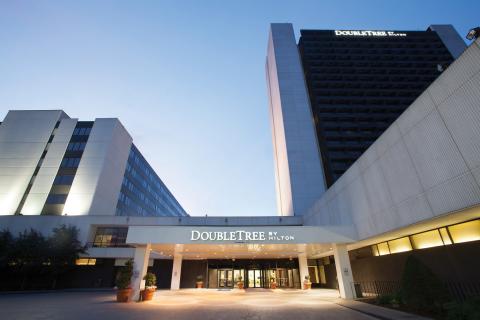
- DoubleTree by Hilton Hotel Bloomington - Minneapolis South
- Minneapolis, MN
- July 28 – 29, 2026
Hotel Information
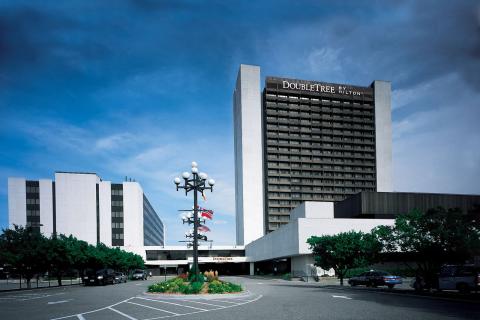
- DoubleTree by Hilton Hotel Bloomington - Minneapolis South
-
Minneapolis, MN
-
$169 per night + fees
7800 Normandale Boulevard
Minneapolis, MN 55439
Room block closes 7/3/2026.
Conference Agenda

Jim Wenson
Sinto America
Grand Ledge, MI

Jim Wetzel
Nxgen Group
Minneapolis, MN
In this keynote, Jim will discuss the current state of people, process and technology(I4.0) in manufacturing and why most digital projects have not been successful. He will challenge you with thinking about your business outcomes and the future state of manufacturing you must create. Gaining alignment, he will show you how to develop a detailed roadmap to achieve this and discuss the lessons learned by others that will tip the scales towards your success.

Nina Dybdal Rasmussen
Monitizer
Copenhagen, Denmark
Casting-level tracking is the next step in the evolution of data-driven green-sand foundries. By stamping a unique ID into each mold during squeeze, each casting can be tracked precisely and linked to the process parameters that created it – dramatically increasing the effectiveness of root cause analysis, along with other benefits. This paper will outline the technical infrastructure required for casting-level tracking and how it fits with, and enhances, an existing IIoT system. It will review current implementations at Aapico (Portugal) and Condals (Spain) who have added casting-level tracking to their IIoT deployments. It will then discuss the results achieved by these foundry users and their future roadmap. Moving from a batch-level to a casting-level view cut Aapico’s scrap rate from 8% to 2% during initial trials. Condals and US- based GREDE foundries are also deploying TAG for root cause analysis and to improve the effectiveness of their AI-driven process optimization.

Jiten Shah
Product Development & Analysis LLC
Naperville, IL
This presentation outlines a strategic roadmap for digital transformation tailored to small and mid-sized foundries, enabling them to leverage Industry 4.0 and 5.0 technologies to remain competitive. A proposed framework will be introduced to assess organizational readiness for digital adoption, highlighting best-practice-driven key parameters and variables across different casting processes and alloys. Special emphasis will be placed on aluminum sand casting, with detailed insights into its design and manufacturing considerations to guide effective implementation of digital solutions.

Mike Lakas
American Foundry Society, Inc.
Schaumburg, IL
AI now seems to be everywhere. Nearly every product claims to have an “AI feature.” But does your refrigerator really need to be intelligent? And more importantly, what counts as AI, and what doesn’t?
This session demystifies modern AI by clearly defining core concepts such as machine learning and how it fits within the broader AI landscape. We’ll also introduce foundation models -what they are, why they matter, and how they are reshaping the way software is built.
The conversation then turns to the emerging promise of AI agents, with 2026 already being described as the “year of the agent.” We’ll examine the current state of the technology, separate real capability from marketing hype, and offer grounded predictions on what’s coming next and what it could mean as we move forward into the AI era.
Session Chair:
Andrew Halonen
Amatrium, Inc.
Calumet, MI

Tyler Rhea
Eirich Machines, Inc.
Gurnee, IL
By taking advantage of physics, technology combined with advanced controls technology offers a unique alternative to green sand preparation. This approach unlocks opportunity for improvements in quality, productivity, environmental and operating costs independent of local ambient conditions.

Todd Hutcheson
University of Northern Iowa
Cedar Falls, IA
An update to the 2026 Metalcasting Congress paper, summarizing additional work done with partners to continue to develop the value case for change for Industry 4.0 technology application.

David Blondheim
Mercury Marine
Fond du Lac, WI
Lucas White
John Deere Foundry
Waterloo, IA

Sairam Ravi
Wisconsin Aluminum Foundry
Manitowoc, WI
Vision systems have come a long way in recent years, making automated inspection and validation a practical and reliable option for foundries. Off-the-shelf solutions can be a great starting point for plants looking to improve quality and consistency. This session will start with an overview of vision technology and real-world lessons learned from implementation, then open the floor for a panel discussion where experts and attendees explore opportunities, challenges, and best practices for bringing vision systems into foundry operations.
Networking, time with Exhibitors, Hors D ’Oeuvres, & Refreshments for All.
Session Chair:
Zach Meadows
EC&S
Birmingham, AL
David Blondheim, Jr.
Mercury Marine
Fond du Lac, WI
AI and machine learning (ML) are often portrayed as silver bullets for manufacturing challenges, but the real story begins with the data behind these tools. This session explores the ongoing journey of a manufacturing operation attempting to predict utility usage. The project began as a simple data analysis request but quickly expanded into a deeper exploration of data integrity, system complexity, and the integration of data sources. Custom scripting played a critical role in cleaning, analyzing, joining, and modeling the data, uncovering what worked, what failed, and the unexpected noise encountered along the way. Like all data journeys, this one continues today. The experience so far demonstrates how data collection practices, quality, and alignment with AI/ML requirements establish the foundation for better questions and stronger results in future projects.
Aaron Hayon
Eck Industries, Inc.
Manitowoc, WI
Jeremy Mares
RedSpin
Milwaukee, WI
CMMC. Most foundries supplying the Department of Defense have heard the acronym. Very few understand what it actually requires, and fewer still have done anything about it. CMMC, the Cybersecurity Maturity Model Certification, is no longer a future consideration. Level 2 assessments went live in early 2025, and the defense industrial base is feeling the pressure.
ECK Industries, a sand and permanent mold aluminum foundry based in Manitowoc, Wisconsin, is believed to be the only foundry of its kind to have achieved a CMMC Level 2 certification, making their experience one of the most relevant and rare data points available to any metalcaster doing DoD work today.
This session is structured around three very important questions:
- What is CMMC and does it apply to me? Jeremy Mares of Redspin, one of the first Authorized CMMC 3rd Party Assessment Organizations (C3PAOs), will break down the purpose of the program, how CUI (Controlled Unclassified Information) flows through the defense supply chain into foundry operations, and what the compliance landscape looks like for shops of all sizes. For smaller operations, he will address the most accessible and cost-effective path forward, including how managing CUI in the cloud can dramatically simplify the compliance burden.
- What did it actually take for ECK to pass? In a live interview format, Jeremy speaks directly with Aaron Hayon, ECK's Director of Technology and Security, about what this journey actually looked like from the inside, including the challenges they did not see coming, the time and resources the process required, and the organizational decisions that shaped their approach. ECK sits on the larger end of the foundry spectrum at roughly 200 employees, and Jeremy will help attendees calibrate what a scaled-down version of this journey might look like for their own operations.
- What should foundries be doing right now? Drawing on both the assessor and the assessed perspective, Jeremy and Aaron will close with direct, practical insights for foundries at any stage of awareness, from those just learning what CMMC means to those already holding DoD contracts and wondering what comes next.
The session closes with 20 minutes of open Q&A, giving attendees the rare opportunity to ask both the assessor and the operator the questions that matter most to their own operations.
Moderator:
Eric Nelson
Eric Nelson Consulting LLC
Mankato, MN
Panelists: 
Rollis Reisner
McWane, Inc.
Birmingham, AL
Adam Westerland
Inductotherm Corp.
Rancocas, NJ

Lidiya Shutaya
MetalTek International
Milwaukee, WI
The transition to Industry 4.0 is revolutionizing energy management in foundries, enabling unprecedented levels of cost efficiency, process optimization, and sustainability. By integrating advanced sensors, Industrial Internet of Things (IIoT) networks, and AI-driven analytics into core melting, molding, and finishing operations, modern foundries can monitor and control energy consumption in real time. Digital twins, predictive maintenance algorithms, and automated load balancing allow for precise scheduling of high-energy processes, reducing peak demand charges and minimizing idle consumption. Machine learning models can interpret vast datasets from furnaces, compressors, and auxiliary equipment, identifying inefficiencies and recommending corrective actions that directly translate into reduced kWh per ton of metal poured. Furthermore, integration with enterprise resource planning (ERP) systems enables closed-loop energy budgeting tied to production forecasts, ensuring both environmental and financial targets are met. Case studies demonstrate that Industry 4.0 adoption can yield double-digit reductions in energy costs while enhancing process reliability and product quality. This panel will explore real-world applications of smart energy management in foundries, outline the enabling technologies, and provide a roadmap for leveraging Industry 4.0 tools to create more competitive, sustainable, and resilient casting operations.
Session Chair:
David Blondheim, Jr.
Mercury Marine
Fond du Lac, WI

Ellyn Neubauer
Mercury Marine
Fond du Lac, WI
Precision temperature control is critical in foundry operations, particularly when melting and pouring from stainless steel ingots. Leveraging a two-color pyrometer system integrated with a PLC, a method was developed to observe and respond to the thermal behavior of liquid metal in real time. The pyrometer continuously monitors the temperature within a ceramic crucible, and once a defined heating slope and temperature threshold are detected, the PLC automatically transitions the furnace into a hold state. This ensures that the metal is poured at an optimal temperature, improving consistency and quality. The defined heating slope was established through extensive data analysis and iterative trials, allowing thermal patterns to be identified consistently that precede ideal pouring conditions. By analyzing historical pyrometer data, key inflection points were isolated coupled with control logic that reliably predicts when the melt reaches its optimal state. This presentation will detail the instrumentation setup, control strategy, slope detection methodology, and the resulting improvements in process efficiency and product quality. The use of pyrometer data exemplifies the potential for data-driven optimization in traditional foundry environments.
Sairam Ravi
VP of Engineering
Wisconsin Aluminum Foundry
Tyler Ruggles
Chief Technology Officer
CVector
The Wisconsin Aluminum Foundry (WAF) is leading an automation and data-driven manufacturing initiative aimed at improving visibility into production performance, quality drives, and process stability across sites. Like many foundries, WAF facilities historically relied on expert knowledge and siloed machine data, making it difficult to systematically identify improvement opportunities or act on them in real time. This case study highlights ATEK Metals, one of the WAF plants focusing primarily on Low Pressure Permanent Mold process, within that initiative. At ATEK, AI agents now monitor production machines 24/7. Agents analyze scrap and efficiency patterns that overloaded engineers did not previously have the time to identify. Molding conditions are monitored around the clock to deliver real-time notifications to operators when process conditions drift out of specification.
Eric Nelson
Eric Nelson Consulting LLC
Mankato, MN
Lethbridge Iron Works (LethIron) began its energy efficiency journey by documenting, baselining, and collecting detailed energy data across its operations. What started as fragmented, process-specific monitoring evolved into a unified, data-driven energy management system that now serves as roadmap for continuous improvement. By integrating demand-based, automated controls and consolidating multiple data collection systems into a single, intelligent platform, LethIron plans to continue improving the overall efficiency and performance of its foundry operations.
This case study will explore:
- How they established a comprehensive data collection and baseline framework.
- How real-time data insights were leveraged to implement immediate process improvements and energy savings.
- How the availability of integrated energy data is opening new opportunities for innovation, automation, and next-generation efficiency strategies.
Every foundry is unique and there’s no “one-size-fits-all” approach. However, by using Lethbridge Iron Works’ journey as a roadmap, others can learn how to move from process management to proactive energy optimization, unlocking new levels of performance and sustainability

Conor Keenan
Sinto America
Grand Ledge, MI
One of the major gaps in MES systems is the aggregation of data without meaningful conversion to insights that measurably improve performance. The so-called “collectors fallacy” is the notion that possessing data is indifferentiable from understanding its usefulness. The worlds of finance, marketing, and logistics make rigorous use of advanced pattern recognition to drive decision making, but the manufacturing world has largely lacked in utilizing machine learning tools as a means to more efficient targeted insights. In this presentation, we will see examples of how intelligent manufacturing tools function not simply as data collectors, but productive models that emphasize pattern detection as much as data transparency, as well as its real-world use cases in correlative analysis, proactive maintenance, real-time parameterization, and financially efficient decision-making.

Jacob Moreau
Kautex Textron, CWC
Muskegon, MI
Jacob Moreau from Kautex Textron, CWC Division’s will discuss their deployment of a Boston Dynamics’ Spot Agile Mobile Robot. Spot performs over 120 autonomous inspections throughout the CWC plant, capturing highly repeatable data to support the maintenance team.
3M Center
223-4S-02
St. Paul, MN 55144
(Must be an AFS Member to attend committee meeting)
DoubleTree by Hilton Bloomington Minneapolis South
Atrium 4
Minneapolis, MN
Registration
AFS Member:
$720.00 Early Registration (Ends 6/23/2026)
$900.00 Standard Registration
Non-AFS Member:
$1,125.00 Early Registration (Ends 6/23/2026)
$1,350.00 Standard Registration
AFS presents a variety of technical and management conferences (in both in-person and virtual formats). The refund policy for AFS conferences is as follows: 1) Substitutions are accepted at no charge at any time up until the start of the conference; 2) Full refunds are offered if AFS is notified in writing of cancellation at least 30 days in advance of the conference. No refunds or credits are available for less than 30 days written notice.
Sponsors
Gold